Details
ISBN/EAN: 978-3-525-36092-7
Einband: gebundenes Buch
Weitere Details
Auflage:
1. Auflage 2019
1. Auflage 2019
Erschienen am:
11.11.2019
11.11.2019
Sprache:
Deutsch
Deutsch
Umfang:
238 S.
238 S.
Format (T/L/B):
1.7 x 23.8 x 16.2 cm
1.7 x 23.8 x 16.2 cm
Hersteller:
Vandenhoeck & Ruprecht
ute.schnueckel@brill.com
Theaterstraße 13
DE 37073 Göttingen
Vandenhoeck & Ruprecht
ute.schnueckel@brill.com
Theaterstraße 13
DE 37073 Göttingen
Weitere Details
arrow_forward_ios

Mythen und Narrative des Entscheidens
Kulturen des Entscheidens 3
79,00 €
inkl. MwSt.
Lieferbar innerhalb 1 - 2 Wochen
Beschreibung
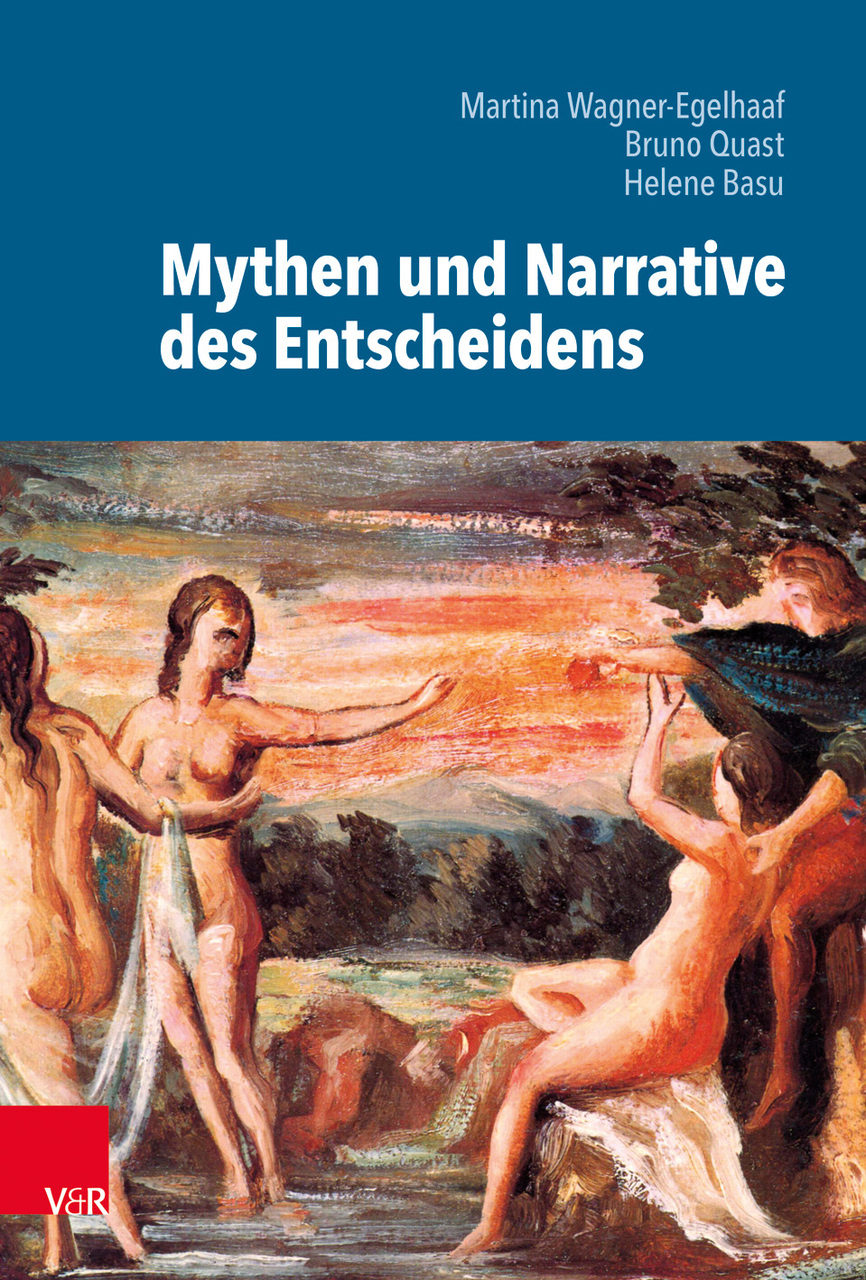
Many myths that are told again and again are myths of decision-making, such as for instance the decision of Adam and Eve in Paradise to eat the forbidden fruit, the choices of Paris and Heracles, or Buridans donkey who starves between two equally attractive haystacks because it cannot decide which one to eat. This volume presents novel interdisciplinary approaches to the question of decision-making as it is reflected in myth and literature. It investigates the relation of myth, narration and the challenge of decision-making. The collection highlights especially the narrative structure of the impossibility to decide that has also been discussed in modern theories of decision-making. Contrary to Rational Choice Theories, the contributions of this collection aim at a Cultural Study approach to decision-making that focusses on social processes of culture specific forms and historical change in decision-making scenarios.
Über Martina Wagner-Egelhaaf, Bruno Quast, Helene Basu
Dr. Helene Basu ist Professorin für Ethnologie an der Westfälischen Wilhelms-Universität Münster.
Schlagzeile
Es gibt Mythen des Entscheidens, die immer wieder erzählt werden: die Entscheidung von Adam und Eva im Paradies, vom Baum der Erkenntnis zu essen, das Urteil des Paris, Herakles am Scheideweg oder Buridans Esel, der sich zwischen zwei Heuhaufen nicht entscheiden kann und deshalb zugrunde geht. Der Sammelband untersucht das Verhältnis von Mythos, Narration und Entscheiden. Er setzt in Mythos und Literatur erzählte Entscheidensszenarien in Bezug zu modernen Theorien des Entscheidens und fragt nach ihrer Funktion sowie den Veränderungen in unterschiedlichen historischen und kulturellen Kontexten.